studied printmaking, weaving, architecture, and interior design.
1898 Wien, AUT
1944 Auschwitz-Birkenau, PL
matriculated: 1919
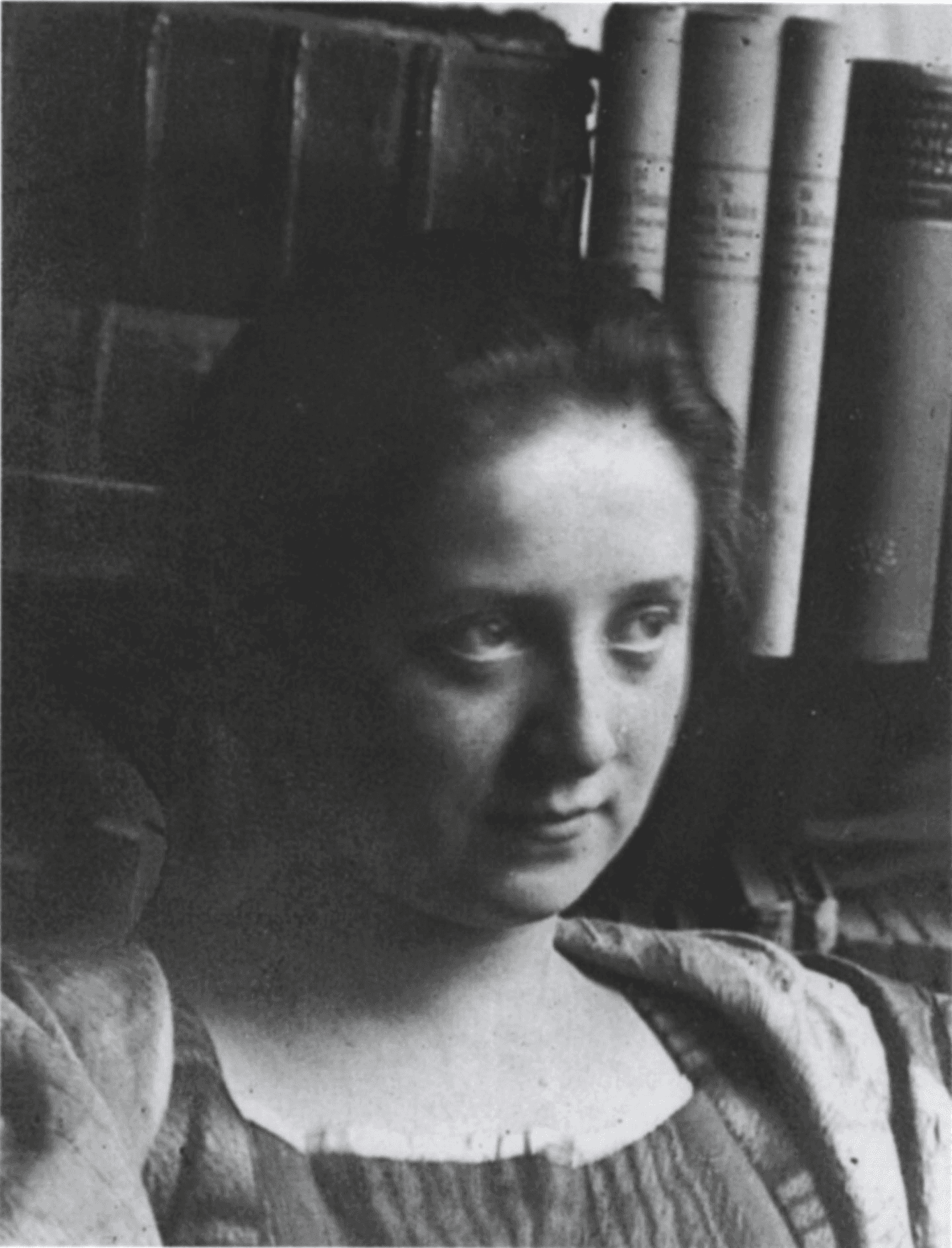
Friedl Dicker was born in 1898 into a Jewish family in Vienna. From 1912 to 1914, she completed an apprenticeship in photography at the Graphische Lehr- und Versuchsanstalt in Vienna. Beginning in 1915, she attended the textile class at the Vienna School of Applied Arts, and from 1916, she studied at Johannes Itten’s private school.
Three years later, Itten was appointed to the Bauhaus and brought a group of students with him, including Dicker. Between 1919 and 1923, she studied at the Bauhaus, focusing on printmaking, weaving, architecture, and interior design, while also expanding her skills in painting, drawing, bookbinding, and stage and costume design. After her first semester, she was selected by the Master Council to teach her fellow students and received one of the rare scholarships that allowed her to attend the courses free of charge. She became one of the artistic leaders of the theater group “Die Troope” and designed sets and costumes.
In 1922, she gained early recognition as an architect and is considered the first Bauhaus student to design a flat-roofed building. Together with Franz Singer, an acquaintance from before her Bauhaus studies, she designed a small flat-roof house in Berlin, typical of the Bauhaus style.
In 1923, Dicker and her Franz Singer moved to Berlin and founded the workshops Bildende Kunst GmbH under the name “Bauhaus (Weimar) Zweighaus Berlin,” selling handcrafted fabrics, lithographs, books, and tapestries. Dicker returned to Vienna in 1925, followed by Singer a year later, and in 1926 they opened the Wiener Atelier Singer-Dicker, working in architecture, interior design, and fashion. During the Nazi period, many of the studio’s residential designs were destroyed, as most clients were Jewish.
Dicker was politically active and joined the Communist Party. Her works were also highly political and anti-fascist. In 1934, she was arrested for possessing false papers and fled to Prague. In 1936, she married Pavel Brandeis, becoming a Czech citizen and relocating to Hronov, northeast of Prague. She declined offers of exile to Palestine and London. In 1939, her work permit was revoked.In 1942 Friedl Dicker was deported to the Theresienstadt concentration camp, where she secretly taught children according to Bauhaus methods, later earning recognition as the “grandmother of art therapy.”
In 1944 she was deported to Auschwitz and murdered, becoming one of at least nine female Bauhaus students who lost their lives in the Holocaust.

ArchInform, 2021. Geraadpleegd op 19 februari 2026
FRIEDL DICKER
MORE